Now that you’ve learned about Australian Shepherds, I’m going to share a little about mine.
Captain Morgan, yes he is named after the rum, is a two and a half year old blue merle. My boyfriend, Harrison, got him from a breeder in Blacksburg, Virginia. After I met Harrison, Captain quickly became mine.
Here are a few of my favorite moments with my Cappy-
Captain loves walks, especially in the rain. However, he’s not a fan of early morning walks. He is a very sleepy and cuddly boy.
Like most Aussies, Captain is very protective when it comes to what is his. For example, if Harrison is giving me too much attention, Cappy will bark until Harrison stops. But, he does love his daddy.
Also like most Aussies, he is very sassy and likes to show it off.
He will let you know when he’s hungry…and when he needs to go potty.
He’s very photogenic.
And he loves selfies!
I hope you have enjoyed reading my blogs and have learned a lot. I appreciate your support and hope your love for Australian Shepherds grow in the future.
Now that you have decided to bring a furry friend into your house, where do you get one? This blog post will give you all the information you need on how adopt your Aussie, and all of the options you have.
Rescue
A good place to start is Facebook, my favorite page is Australian Shepherd Rescue. This page posts daily about different Australian Shepherds that need rescuing all around the country. The page’s posts consist of a picture of the Aussie up for adoption with a link. When you go to this link you will learn more about this specific dog to see if this one would fit in with your home life.
Another website that is great for finding not only Australian Shepherds, but almost any animal is Rescue Me. This website has dogs, cats, horses, rabbits, farm animals, small mammals, reptiles/ amphibians, pet birds, wildlife, and wild birds all up for adoption.
You won’t have much luck finding an Australian Shepherd at your local SPCA. The Aussie is a pure bred dog that probably won’t be surrendered to an SPCA. If they do have an Aussie, chances are high it is mixed with something else. The reason pure bred dogs won’t be found here is because they have special requirements that other dogs don’t. After reading some of my blogs, could you imagine putting an Aussie in a cage all day? That pup would be miserable. If someone surrenders an Aussie to their SPCA, then the employees will give that dog to a rescue. Rescues can then find a foster home and begin advertising.
Once you find the Australian Shepherd you want to adopt, you send a message to the company, or person selling him. The owner will then send you an application. Linked is an example of an application, but they all differ. Although the applications differ, they all have the same goal. The goal of an adoption application is to see if you are fit to own the type of animal and breed you are trying to rescue. For an example, the Australian Shepherd adoption forms will ask if you have ever owned an Aussie before, or if you know anyone that has. It will then ask for several personal references to see if you are fit. The application will go very in depth. It’ll ask for your medical history, your marital status, past animals you’ve owned, and if you’re planning on having children.
Rescuing a dog is not a quick and easy task. Sometimes the company or the person fostering the dog will ask for an in-person interview, and will come to your house to see if it is fit for a dog. When they come to your house they will look for a yard, and a safe environment for an Australian Shepherd.
Even though rescuing an Aussie takes time, it is worth it knowing you’re saving the life of a sweet animal.
Breeder
Along with rescues, breeders have websites and Facebook pages. A good website to use is AKC Puppy Finder. Here you will select everything you’re looking for in your Aussie puppy and then you will get matched up with the perfect one for you.
Getting an Australian Shepherd from a breeder is much different than getting one from a rescue. For starters, the application process is much easier. You still have to fill out an application, but it is not as in depth as a rescue application. You’ll have to say if you’ve owned an Aussie before, if you know someone who has, and your home life (kids, spouse, if you have a yard, etc.).
Another perk to using a breeder, is you are guaranteed a healthy dog. If you bring your new Aussie pup home and they have some sort of illness, like cancer, some breeders will let you take it back and pick out another one. That might seem harsh, but if you have other dogs or pets at home, you don’t want them getting sick. Other breeders might help you with the vet bill and give you a discount on a future dog. However, most breeders take the puppies to a vet before giving them to their forever home so you know you’re getting the very best.
A con to getting an Aussie from a breeder, is the price. All dogs from a breeder are more expensive than rescuing one. However, a way to make the puppy cheaper is to not purchase their papers. If you choose to not purchase their papers, it means you don’t have proof that it is a pure bred Aussie. This means you can’t breed him in the future.
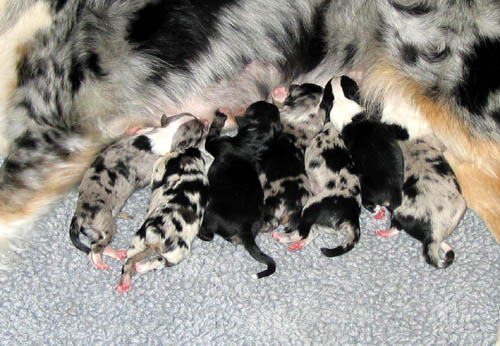
However, a nice thing about breeders, is you get pictures and videos as soon as yours is born!
Bringing home a puppy is like bringing home a baby. You have to puppy proof your house, and you have to lock down a solid routine. While this blog is aimed for Australian Shepherds, all puppies require the same things.
Step One: Puppy proofing
So, you’ve decided to bring home a fur baby; buckle up because you’re about to be busy. First things first, you need to put everything you care about away, seriously, if you even slightly care about something put it away. Puppies will chew anything and everything. All shoes need to be in a place your puppy cannot get to them. Along with chewing, your sweet puppy will have accidents, probably everywhere in the house so pick up rugs that are important to you.
I have a two year old Australian Shepherd and have taken many emergency trips to the veterinarian. One of my biggest tips is to keep doors closed and always know where your pup is. Your puppy is curious, they want to explore every last inch of their new home. When my Aussie was a puppy, he snuck into the bathroom and chewed a razor that was in the trashcan. He didn’t need any stitches, but it could’ve been a lot worse if he hadn’t been caught when he did. Getting a puppy is a huge responsibility, they require a lot of time and supervision.
Once your puppy passes through the phase of chewing everything in sight, you won’t have to worry about picking everything up and closing every door. I can now leave my phone charger on the coffee table and know Captain won’t touch it. However, when he was a puppy this was not the case. It is always better to be safe rather than sorry when it comes to your sweet new addition to your life.
For more tips on how to puppy proof your house, check out this article: Puppy Proofing Basics
Once your house is all ready for your bundle of joy, its time to set a schedule. Routines are vital to training your pup, this is the foundation for the rest of their life. ‘
Lets start with the morning, right off the bat you need to take your pup out. Don’t take too long getting them outside because they will get excited and have an accident. Once they do their business, reward them with a treat. This is important because they don’t know where they’re supposed to do their business. Once they’ve gone outside a few times they will start to associate doing their business outside to treats, causing there to be fewer accidents inside.
After their morning potty break, give them fresh water and some breakfast. Every breed of dog requires a different kind of food and a different amount. You can feed your pup a little bit for lunch, and then again for dinner. Be careful with the food because your puppy can get sick. That was yet another reason for an emergency trip to the veterinarian. My Aussie loved his puppy food, but I switched it to a different brand and he refused to eat. I had no idea why he was refusing to eat, so I took him to the vet. The doctor then explained to me that my Aussie is stubborn and wants his brand back. So I switched back to his original brand and haven’t had a problem since. Like I have mentioned in previous blogs, Aussies will let you know when they’re displeased.
A little bit after breakfast you’re going to want to take your puppy out again. Get used to this because puppies require a lot of bathroom breaks. Puppies also require lots of naps. Growing big and strong is hard work, so don’t be surprised if your puppy sleeps 16 to 18 hours a day. If you have small children, make sure they don’t wake him too much.
Evening time is perfect for lots of play. You want your puppy to get out as much energy as possible so they can sleep through the night. But you still have to get up in the middle of the night to let him do his business outside.
A big question is should your puppy sleep in a crate or can he sleep in bed with you. For the first few weeks, your puppy should sleep in his crate. You can’t watch him during the night so you don’t want him to explore too much and get in trouble. Having a crate is also nice because its their own space. Straight out of the gate, make it clear to your pup that their crate is their own space and its a safe place for them. Don’t make the crate a punishment. Be careful with how you crate train, you don’t want your puppy to be scared of it. You want them to feel safe in it.
For how to properly use a crate rad this article: Crate Training
Speaking of puppies, check out this time-lapse of Aussie pups growing! You’ll see a lot of playing and sleeping, which basically sums up puppy life.
If you’re unsure if an Australian Shepherd is for you or not, this is the blog to read! I’m going to give the honest lowdown on pros and cons to owning this breed.
Pros:
These dogs are very trainable. An Australian Shepherd is one of the most obedient and smartest breeds of dogs, they want to be trained because they want to please their owner. Some of Australian Shepherd’s most notable traits are how protective, loving, and happy they are. Since Aussies are herding dogs, they have the protecting gene. This makes them the perfect fit for a family.
Because they have the drive to please their owners, they are very affectionate. If you’re coming home from a long day at school or work, your Aussie will be the first to great you at the door with a smile, licks, and a wagging nub. For me personally, my Aussie knows if I’m upset and will cuddle with me all day. This breed is very sensitive to their owners. What drew me to Australian Shepherds was the fact that they will be your best friend. Some dogs can be very independent, but this dog thrives with companionship.
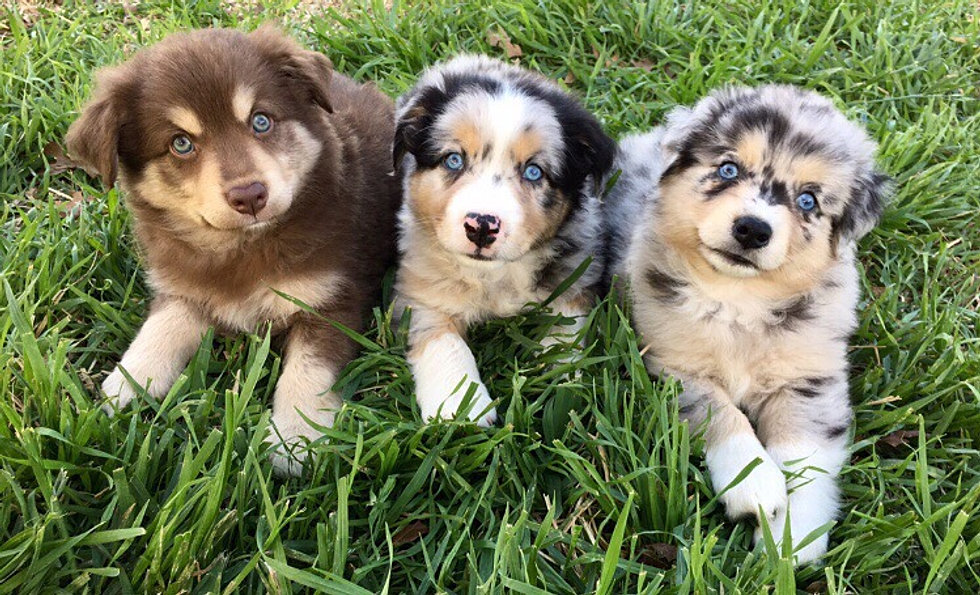
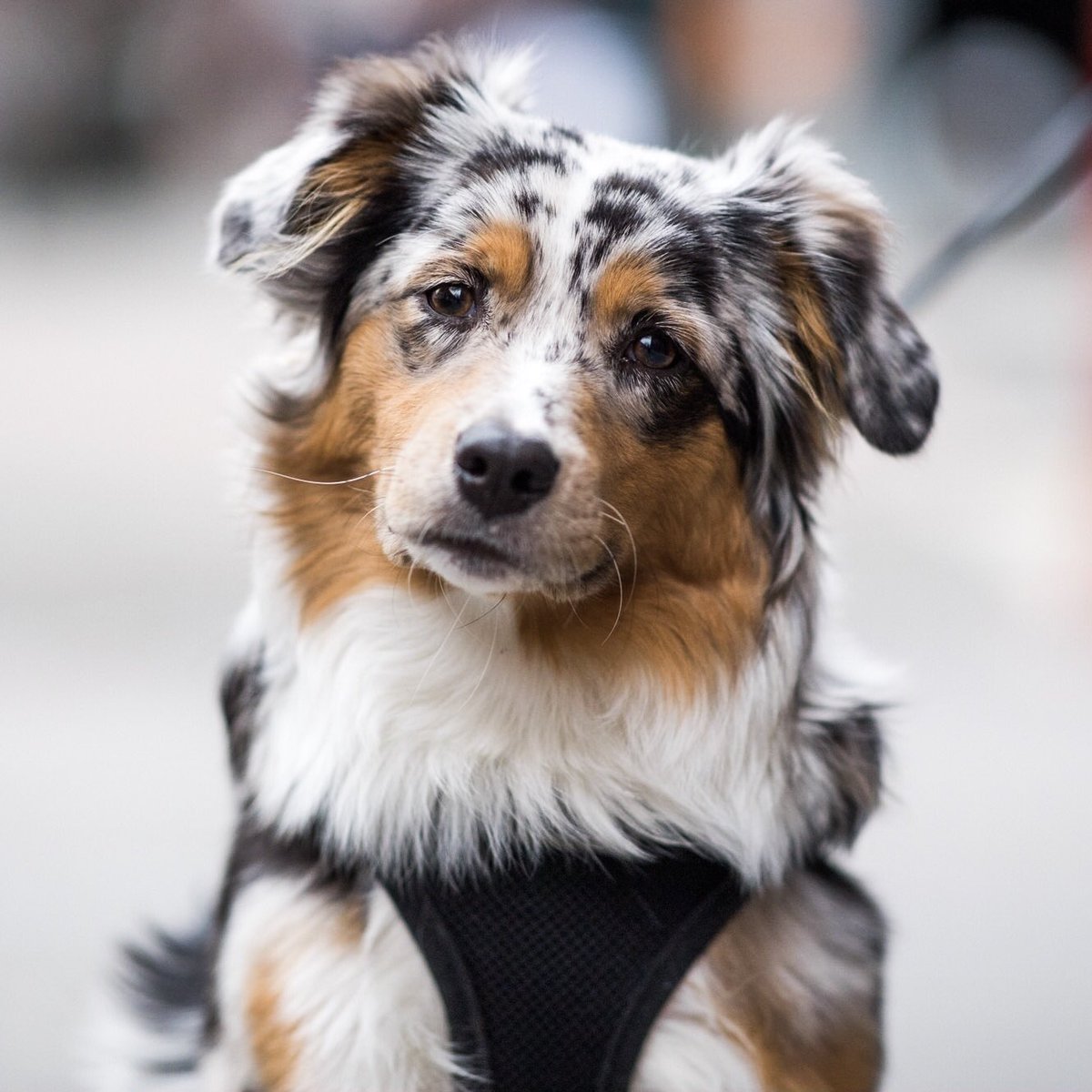
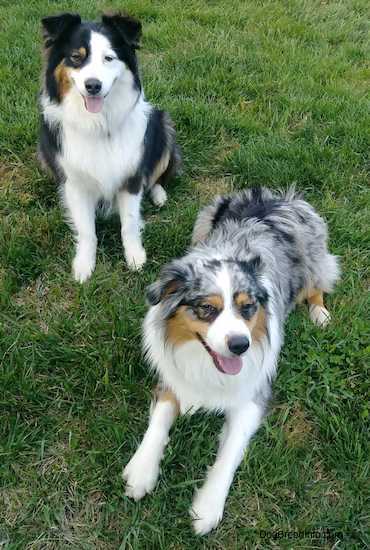
A huge pro is obviously their looks…I mean look at these suckers!
Cons:
Like I mentioned before, this breed is smart…a little too smart sometimes. If I leave my Aussie alone for too long he will take the lid off the trashcan and make a mess. Speaking of messes, if you want an Aussie you’re going to need a nice vacuum. These dogs shed twice a year, for 6 months at a time.
If you’re a couch potato, this dog is not the best fit for you. They require lots of exercise or they will get into trouble. Since they need so much exercise, a big health concern is their hips. Around 6 years old, most Aussies start getting hip joint problems.
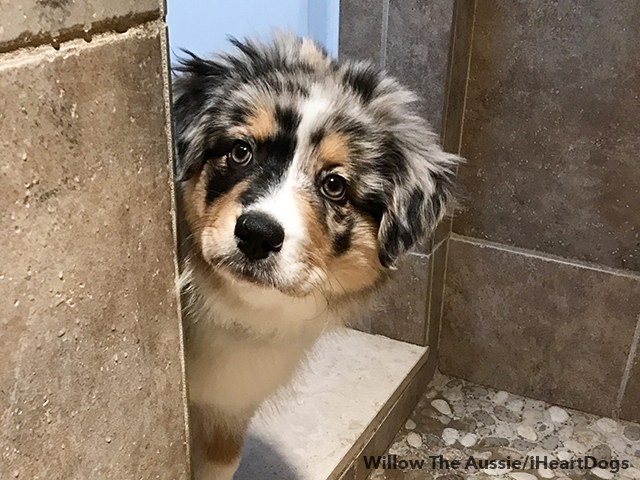
A lot of their pros can also be seen as cons. For example, if you don’t want a dog to sit outside of your shower and stick their head in (like above), then this breed isn’t for you. Aussie’s are very dependent on love and affection from their owners. They show when they’re happy, and they show when they’re upset. If its 5:01pm and my Aussie hasn’t eaten yet, the house is filled with his whining. Even though that can be taken as a con, it is something I love about my Aussie.
Every breed has their pros and cons. Its up to you as a future dog owner to know what you want out of a dog. I wanted a best friend that follows my every move, and I found that in my Australian Shepherd. However, if that isn’t something you want, there are hundreds of breeds out there for you.
Check out this website to see what breed fits your life perfectly:
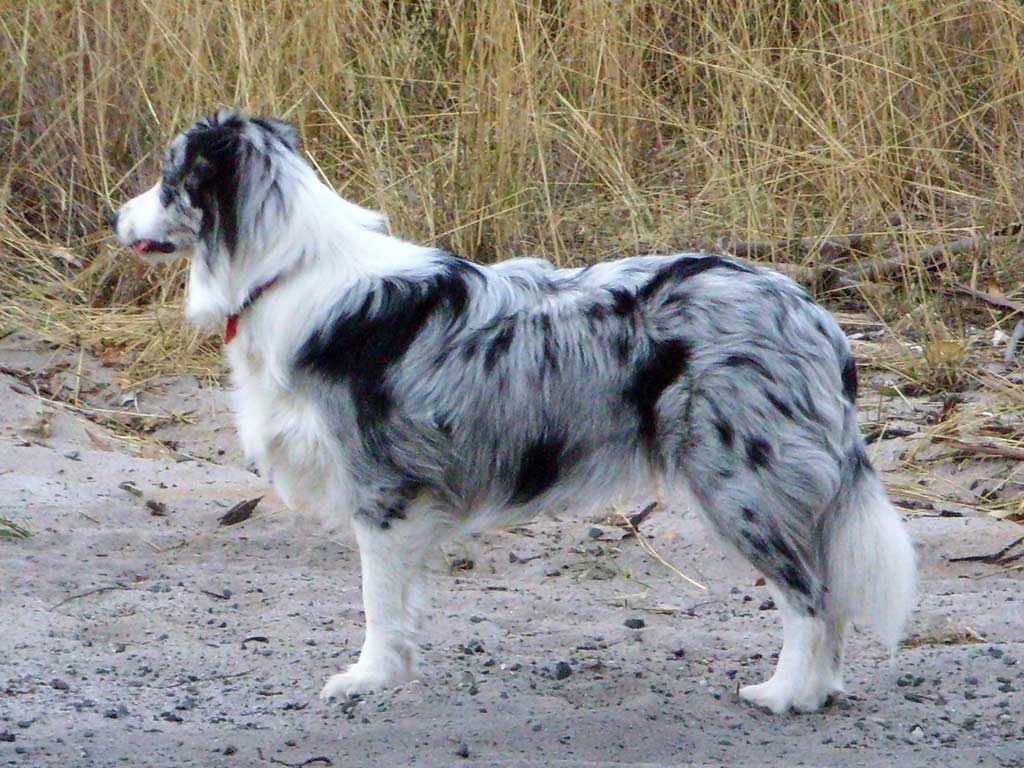
The Border Collie was bred to herd sheep near England and Scotland. This breed is very similar to Aussies because they almost NEVER get tired. They are working dogs and they love it! Aussies and Border Collies often get mistaken for each other. Can you tell which one is an Aussie and which is a Border Collie above? TIP: Don’t let the tail fool you (Answer at the end)
This breed looks very different from an Australian Shepherd, but they have similar herding instincts and temperament. The Australian Cattle Dog has endless energy and is very intelligent. They were bred to herd cattle by Australian Settlers. Their temperament is similar to an Aussies when they want to learn and be apart of family activities. However, the Australian Cattle dog tends to be a little more wary of strangers and a little more protective of the family than an Australian Shepherd. My Aussie LOVES going up to people and saying hi, but he doesn’t like when strangers approach me, especially at night.
Surprise surprise, another breed that loves to herd. The Belgian Sheepdog is bred to herd guess what….sheep! Other than herding, this dog also works with law enforcement. In Paris and New York during World War I, these pups were used as messengers, and pulled machine guns. After the war, people adopted this smart breed into their families. Like the Australian Shepherd, this breed loves companionship and will follow their owners around.
This bear like dog is a big deal on the farm! They are used to herd cattle, pull carts, and to guard. Not only is this breed popular on farms, but they are also used as service dogs, guard dogs, and law enforcement. Like Aussies, they are great family dogs because of their instinct to protect and their drive to learn. Even though this breed is used for work and service, they do not see themselves as working for their owners. They see themselves as equals, part of the group or family. This breed thrives off of companionship so don’t think about leaving this pup out!
This breed is yet again a herding dog! The Briard was bred to be two dogs in one. Their two jobs are to herd the livestock and to protect the livestock by chasing off predators. They are eager to learn new tricks and to work. Like other herding dogs, they are very protective and good family dogs. Australian Shepherds are great family dogs, but they don’t contain the protective trait as much as other herding dogs. Two fun facts about Briard pups is that they have been around since Charlemagne, and they are actually named after cheese. This breed began in a region of northern France called Chien Berger de Brie. This region is known for the cheese, specifically brie cheese, they develop on dairy farms. I’m not sure how cheese correlates to a herding dog, but it makes for a cool story.
Yes, another herding dog, but what is really interesting about this breed is their history. No one knows exactly when this breed came about, but artifacts dating back 4,000 years have been discovered that contain inscriptions that look just like the Canaan. Because no one knows when this breed was born, it is assumed they were used as shepherds assistants on farms for thousands of years. The history becomes more solid during the years of the Romans occupying Judea. Once the Romans destroyed Jerusalem, these dogs were left for dead. Instead, the dogs went to the Negev Desert where they survived alone until the 20th century. Surprisingly, this dog still makes for a great family dog. They are of course protective, and need lots of exercise.
So which is which?
Believe it or not, the Australian Shepherd is on the right and the Border Collie is on the left! The traditional Aussie doesn’t have a tail, but a lot of the time they are born with one. My Aussie, Captain, was born with a bobbed tail so the breeder didn’t even consider docking it. However, the owner or breeder can decide to dock the tail if they prefer the typical Aussie look. Docking is done 24 hours after the pup has been born. A band is placed around the pup’s tail cutting off blood supply. Within a few days the tail will fall off. This sounds harsh, but if you’re getting an Aussie for herding purposes this is necessary. The natural tail of an Aussie is long and fluffy, this gives cattle or sheep something to step on or bite. Having a docked tail also helps keep the working Aussie clean. However, if you got an Aussie for the same reasons I did, a companion, then docking is unnecessary.
This is a picture of an Australian Shepherd mixed with a Border Collie. Could something be any cuter?
Like any animal, Australian Shepherd’s have a personality and temperament. Before bringing a dog into your life, you should be fully aware of what to expect with an Aussie.
As I have written about in a previous blog, Australian Shepherds were bred for herding. Even if your Aussie has never seen cattle or sheep, they still have the herding instinct. For example, my Aussie pup LOVES children. So much so, he tries to herd them. Because of this insticnt, Aussies need lots of playing and running time. This is not a dog you get to be a couch potato, this dog requires lots of exercise or they will get into trouble. If an Aussie is bored, like most dogs, they will start chewing furniture, shoes, and going through the trash.
Australian Shepherds are insanley smart, this means they are fairly easy to train. However, this breed needs to be trained quickly while they’re young because their herding instincts can get them hurt. For example, my Aussie will chase cars, squirrels, and everything in between. This breed craves to be taught, they love learning and thinking. Sometimes they think too much and are too smart. My Aussie will try to trick me into feeding him a second time after my boyfriend has already done it.
Along with craving knowledge, Aussies also crave companionship and want to be involved in everything. If I’m walking somewhere, I know my Aussie is one step behind me. This is nice because I wanted a dog to be attached to me. However, it is difficult leaving the house because my pup will start barking. This breed is highly prone to separation anxiety. A way to help this, is to spend quality time with them every single day. This time can be spent playing outside, taking a walk, or simply playing with a toy.
Usually Australian Shepherds are outgoing and very friendly. Once trained to not herd and nip at children, they are great family dogs. Since Aussies require so much attention and companionship, a family with a few children would be the perfect environment. However, with any animal there are a few exceptions to this. Of course there are a few Australian Shepherds that might not like children, but this is very rare.
Overall this breed is usually very happy and easygoing. However, their temperament will show if they are not happy. These dogs are very vocal when it comes to their food, bathroom breaks, and attention. Whining and barking are how Aussies usually get their points across, they aren’t likely to bite, but of course every dog is different. Compared to other breeds, this dog has a very low temperament.
Loving an Australian Shepherd is one thing, but grooming one requires lots of work. As you have probably guessed, Australian Shepherds have a ton of hair, which comes with a lot of upkeep. Today, I am going to provide you with 4 quick tips on how to keep your Aussie pup happy and healthy!
Tip 1: Coat
Lets start with the most obvious, their coat. A common question about this breed is, can you shave them? Some people say of course! Others say absolutely not! So which is it?
You can in fact clip an Australian Shepherd’s hair, but it isn’t required and highly discouraged. The only time you should trim an Aussie’s hair is if the coat has knots in it, or the skin is damaged. Instead of cutting your Aussie’s hair, brush them! This breed needs to be brushed multiple times a week, if not every day. However, if you absolutely must trim your Aussie, be careful to leave at least an inch left. If you cut their coat too short, it has the chance to not grow back or won’t grow back to how it looked before. The reason Aussies shouldn’t be shaved is because they have double coats. This is to help them regulate their temperature and to protect them from the summer sun.
Tip 2: Nails
Unlike their unique coats, Aussie’s do not come with any special instructions on their nails. Just like any other dog, their nails should be trimmed, using the appropriate tools, every other month, or when you can hear their nails on the ground. If your Aussie is anything like mine, then you share the struggle of trimming their nails. A big piece of advice I have is to start young! Your Aussie is much more likely to let you cut their nails if they have experienced it many times before and know it will not hurt them.
Aussies are very hairy…everywhere…even their feet! This can make it difficult to see where you’re cutting. To make sure to not trim their nails too short, causing pain to your pup, use a bag of oranges. This tip requires a bag with holes, like a bag of oranges, and a cellphone light. All you have to do is put your dogs nails through the holes. The rest of the bag holds their hair back for you! The cellphone light is used to show exactly how far to trim so you don’t accidentally cut their nails too short.
Tip 3: Bath Time
How often to bathe your Aussie depends on where you live and what he has been up to. For an outside, active pup, you should wash them anywhere between 4 to 6 weeks. However, if yours is an inside pup, like mine, you can get away with washing him between 3 and 4 months, sometimes longer depending on the weather. I avoid giving my Aussie a bath when its extremely cold outside so he doesn’t catch a cold.
While washing your Aussie, make sure to start from the head down, avoiding the eyes. You don’t want to neglect his belly, behind his legs, and ears. Those are spots where dirt and grease like to build up. When you rinse your pup of the shampoo, make sure to be extremely thorough. Since this breed has a double coat, it will hold on to the soap making them itchy later on. If your Aussie is a puppy, pregnant, or aging, be careful of the temperate after bath time. Some owners use a hairdryer to speed up the drying process.
Many Aussies love water, but others don’t. A trick I have for keeping your Aussie in the tub, is to put peanut butter on the wall. This trick keeps my Aussie in the tub for his whole bath. It also keeps him distracted so I can focus on cleaning his trouble areas, like his legs and belly. Don’t worry about cleanup because any Aussie can clean peanut butter off a surface in no time!
Tip 4: Dental Care
Dental care tends to slip a lot of dog owners minds; however, when it comes to Australian Shepherds, this is a step you don’t want to miss. This breed is more prone to dental deseases than other breeds are. An easy tip to keep your Aussie’s teeth and gums healthy is to buy dental chews. This is one of the easiest things to do in order to prevent dental desease, and it makes their breath smell better! We all know that stinky dog breath.
To love your Aussie means to take care of your Aussie! Using these simple grooming tips will make the job of taking care of them a lot easier and a lot less stressful.
To begin the journey learning about Australian Shepherds, lets dive in to their origin.
First things first, the Australian Shepherd isn’t actually from Australia, they were brought over to America from Europe for herding purposes in the 19th century. There are many different speculations as to how the Aussie got its name since they are not from Australia. One story states that they got their name based off the colors of their coats. A typical Australian Shepherd has a blue merle colored coat, many dog breeds from Australia also share this characteristic. However, there are many different stories as to how they got their name, but no one knows for sure.
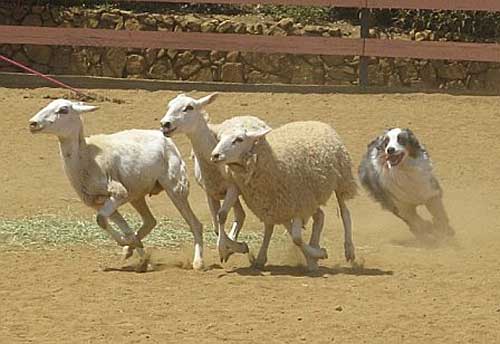
When the breed arrived in the 19th century, they flourished on the ranches of America’s Midwest. The Australian Shepherd became popular after World War II because of horse shows and rodeos. People saw how intelligent this breed is combined with their amazing work ethic. The Australian Shepherd can herd anything, ranging from ducks and geese to sheep and horses. If there is something that needs to be done on a farm, the Aussie can take care of it. Today this dog is loved by millions, families and farmers alike.
For more history about Australian Shepherds check out these sites:














 Ins and outs of owning an Australian Shepherd